:+86 15106109009#
:sales@couplingzy.com#

 tl
tl


Ang Stability ng Metal Flexible Couplings sa Extreme Temperature Environment
Metal elastic couplings sumasakop sa isang natatanging posisyon sa mechanical power transmission: hindi tulad ng polymer-based flexible couplings na ang pagganap ay mahigpit na nakatali sa isang makitid na thermal window, ang metal elastic couplings ay nakukuha ang kanilang pagsunod mula sa kinokontrol na pagpapapangit ng mga elementong metal — disc spring, leaf spring, diaphragms, bellows, o serpentine flexures. Ang all-metal construction na ito ay nagbibigay sa kanila ng pangunahing thermal advantage. Gayunpaman, ang mga sukdulan ng temperatura ay nagpapataw ng kumplikado at madalas na nakikipagkumpitensya na mga pangangailangan sa mga materyal na katangian, dimensional na katatagan, pag-uugali ng pagkapagod, at kondisyon sa ibabaw. Ang pag-unawa sa kung paano tumutugon ang mga metal elastic coupling sa mga hinihinging ito ay mahalaga para sa mga inhinyero na tumutukoy sa mga drive system sa aerospace, cryogenic processing, steel production, gas turbines, at anumang aplikasyon kung saan ang mga kondisyon ng kapaligiran ay lumilihis nang malaki mula sa standard room-temperature design baseline.
Ano ang Tinutukoy ng Metal Elastic Coupling
Ang isang metal elastic coupling ay nagpapadala ng torque sa pagitan ng isang driving shaft at isang driven shaft sa pamamagitan ng elastic deformation ng isa o higit pang metal na flexible na elemento sa halip na sa pamamagitan ng matibay na mekanikal na contact o isang polymer insert. Ang elastic na elemento ay sabay-sabay na gumaganap ng tatlong function: ito ay nagdadala ng transmitted torque, ito ay tumatanggap ng relative shaft misalignment sa pamamagitan ng controlled flexure, at ito ay nagbibigay ng isang antas ng torsional compliance na nagsasala ng mga pagbabago sa bilis at attenuates dynamic loading.
Ang pangunahing metal elastic coupling na mga pamilya na nakatagpo sa pang-industriya at aerospace practice ay:
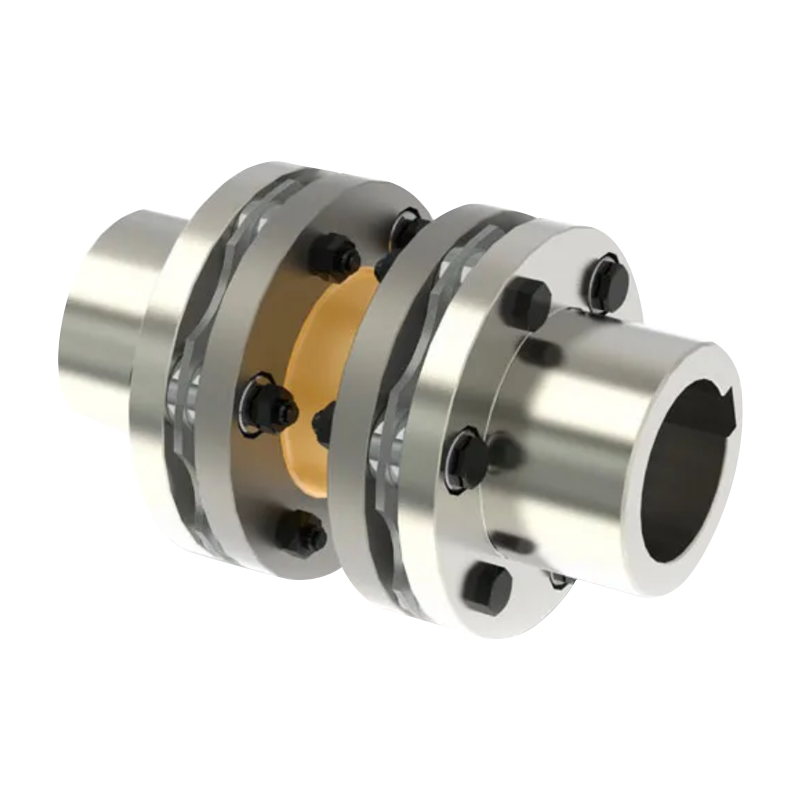
- Mga disc-pack coupling: Manipis na pabilog na laminated na mga disc, karaniwang gawa sa hindi kinakalawang na asero o haluang pinatigas ng ulan, salit-salit na naka-bolt sa pagmamaneho at pinaandar na mga flanges. Ang flexure ay nangyayari sa disc pack dahil tinatanggap nito ang angular at axial misalignment.
- Diaphragm couplings: Isa o higit pang mga contoured na annular diaphragm, madalas ay gawa sa titanium alloy o high-alloy steel, na bumabaluktot upang ma-accommodate ang misalignment habang nagpapadala ng mataas na torque na may napakababang backlash. Malawakang ginagamit sa turbomachinery at high-speed compressor train.
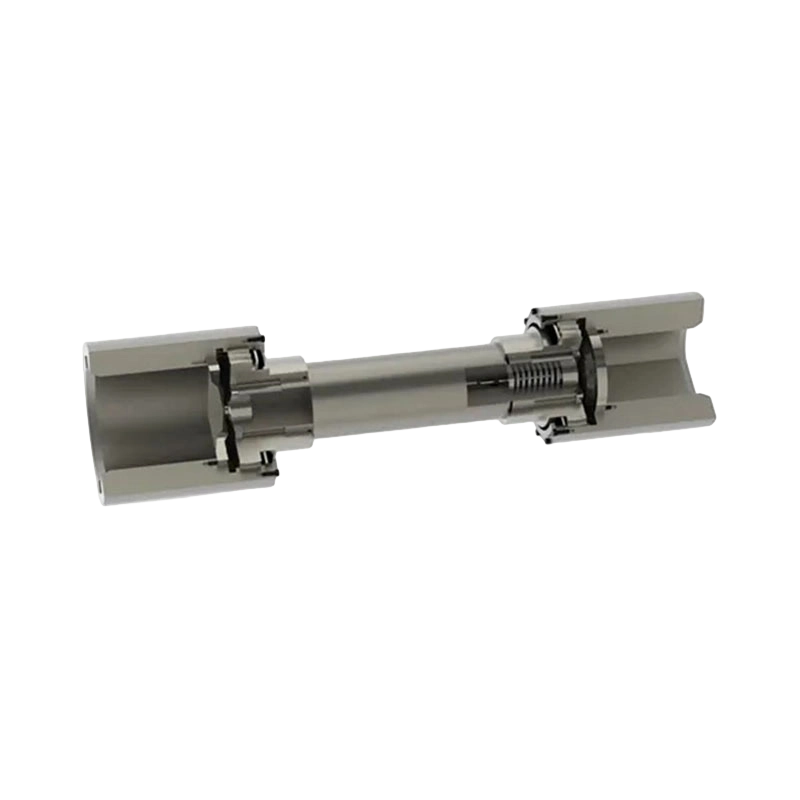
- Bellows couplings: Isang manipis na pader, corrugated metallic tube — karaniwang austenitic stainless steel o Inconel — na nagbibigay ng torsional rigidity para sa torque transmission habang naka-flex sa axially at laterally para mabayaran ang misalignment. Karaniwan sa mga aplikasyon ng precision servo at encoder.
- Leaf-spring (serpentine) couplings: Sinusoidal o serpentine metal strips na pinag-interleaved sa pagitan ng dalawang hub flanges. Ang spring strips ay nakabaluktot sa ilalim ng pagkarga, na nagbibigay ng torsional compliance at misalignment na akomodasyon.
Ang lahat ng mga disenyong ito ay nagbabahagi ng tiyak na katangian na ang kanilang pagganap ay nakasalalay sa mekanikal na pag-uugali ng isang metal na nababanat na elemento — isang dependency na gumagawa ng mga pagbabago na dulot ng temperatura sa mga materyal na katangian na pangunahing pinag-aalala sa mga aplikasyon sa extreme-environment.
Thermal Effects sa Metallic Elastic Elements
Ang temperatura ay nakakaimpluwensya sa pag-uugali ng isang metal elastic coupling sa pamamagitan ng ilang sabay-sabay at nakikipag-ugnayan na mekanismo. Ang pag-unawa sa bawat mekanismo nang paisa-isa ay isang kinakailangan para sa pagsusuri ng pangkalahatang katatagan ng pagkabit sa isang malawak na hanay ng thermal.
Mga Pagbabago sa Elastic Modulus
Ang elastic modulus ng isang metal — ang ratio ng stress sa strain sa linear elastic na rehiyon — ay bumababa habang tumataas ang temperatura at tumataas habang bumababa ang temperatura. Para sa austenitic stainless steel na karaniwang ginagamit sa disc at bellows couplings, ang modulus of elasticity sa 500°C ay karaniwang 15–18% mas mababa kaysa sa temperatura ng silid, habang sa –200°C ito ay maaaring 10–12% na mas mataas. Direktang nakakaapekto ang shift na ito sa torsional stiffness ng coupling: ang isang disc pack o diaphragm na naghahatid ng tinukoy na angular stiffness sa 20°C ay magiging mas malambot sa mataas na temperatura at stiffer sa cryogenic service.
Ang praktikal na kinahinatnan ay isang pagbabago sa torsional natural frequency ng drive system. Kung ang system ay na-tune sa room temperature upang ligtas na ilagay ang resonant frequency nito mula sa operating excitation frequency, ang isang makabuluhang pagbabago sa modulus sa temperatura ng serbisyo ay maaaring magdulot ng resonance na iyon na mas malapit sa isang operating speed, na may potensyal na nakakapinsalang kahihinatnan. Ang thermal correction ng torsional natural frequency calculations ay samakatuwid ay sapilitan para sa mga system na gumagana nang maayos sa labas ng ambient temperature range.
Thermal Expansion at Dimensional Change
Ang mga metal na bahagi ay lumalawak sa pag-init at pagkunot sa paglamig ayon sa kanilang koepisyent ng thermal expansion (CTE) at ang pagbabago ng temperatura na naranasan. Sa isang metal elastic coupling, ito ay nakakaapekto sa:
- Bore at shaft fit: Ang interference fit na sukat sa room temperature ay maaaring lumuwag sa mataas na temperatura kung ang shaft at hub ay lumawak sa magkaibang mga rate - isang kritikal na pag-aalala kapag ang magkakaibang mga metal ay pinagsama, tulad ng isang titanium diaphragm hub sa isang steel shaft.
- Bolt preload: Kung ang nababaluktot na elemento at ang mga bolts na nag-clamp nito ay may iba't ibang materyales na may iba't ibang CTE, maaaring baguhin ng thermal cycling ang bolt preload, maaaring mabawasan ang puwersa ng pag-clamping (nagdudulot ng panganib na madulas sa ilalim ng torque) o pataasin ito sa mga antas na nagbibigay diin sa flange o disc.
- Axial na posisyon ng konektadong makinarya: Ang thermal growth ng mahabang shafts at housings ay bumubuo ng axial displacement na dapat tanggapin ng coupling. Ang kapasidad ng axial ng nababaluktot na elemento ay dapat ma-verify laban sa aktwal na paglaki ng thermal sa buong saklaw ng temperatura ng pagpapatakbo.
Kapag ang isang coupling assembly ay sumasaklaw sa isang makabuluhang gradient ng temperatura — halimbawa, isang coupling na kumukonekta sa isang mainit na turbine shaft sa isang mas malamig na gearbox — Ang differential thermal expansion sa kahabaan ng coupling axis ay lumilikha ng matagal na axial loading na nagpapatong sa mga dynamic na load mula sa torque transmission at misalignment compensation.
Lakas ng Yield at Mga Katangian ng Pagkapagod
Ang buhay ng pagkapagod ng isang metal na nababanat na elemento ay pinamamahalaan ng cyclic stress amplitude na nauugnay sa limitasyon ng tibay ng materyal. Parehong ang lakas ng ani at ang limitasyon sa tibay ng pagkapagod ng mga istrukturang metal ay nakasalalay sa temperatura:
- Sa mataas na temperatura , ang lakas ng ani at pagbaba ng limitasyon sa pagtitiis. Ang isang disc pack na idinisenyo na may kumportableng fatigue margin sa room temperature ay maaaring makaranas ng cyclic stresses na lumalapit o lumampas sa endurance limit ng materyal sa nilalayong operating temperature, na makabuluhang bawasan ang buhay ng serbisyo.
- Sa cryogenic na temperatura , karamihan sa mga high-alloy steels at titanium alloys ay nagpapanatili o bahagyang nagpapabuti sa kanilang tensile at yield strength. Gayunpaman, ang ilang mga materyales - partikular na ang mga carbon steel at ilang mga ferritic na hindi kinakalawang na asero - ay sumasailalim sa isang ductile-to-brittle na paglipat sa ibaba ng isang kritikal na temperatura, pagkatapos kung saan ang bali ay maaaring mangyari sa mga antas ng stress na mas mababa sa nominal na lakas ng ani. Ang pagpili ng mga materyales na may mahusay na cryogenic toughness (mataas na Charpy impact energy sa pinakamababang temperatura ng serbisyo) ay isang pangunahing kinakailangan sa disenyo para sa mga coupling sa mababang temperatura na serbisyo.
Gapang at Stress Relaxation
Sa mga temperaturang mas mataas sa humigit-kumulang 30–40% ng absolute melting point ng metal (ang creep threshold), ang matagal na stress ay nagdudulot ng mabagal, nakadepende sa oras na plastic deformation na kilala bilang creep. Para sa mga bakal, halos nagiging makabuluhan ang creep sa itaas ng humigit-kumulang 400–450°C; para sa nickel superalloys, ang threshold ay mas mataas.
Sa isang metal elastic coupling na tumatakbo sa mataas na temperatura, ang paggapang sa flexible na elemento o sa clamping bolts ay humahantong sa pagpapahinga ng stress - isang unti-unting pagbawas sa nababanat na diin na naroroon sa pagpupulong. Maaaring mawalan ng preload ang mga bolt joint; Ang mga disc pack ay maaaring tumagal ng isang permanenteng set; diaphragms ay maaaring magpakita ng isang permanenteng angular offset. Ang resulta ay isang coupling na hindi na gumagana tulad ng idinisenyo, na may binagong higpit, nabawasan ang buhay ng pagkapagod, at potensyal na nakompromiso ang kapasidad ng torque. Para sa mga aplikasyon sa itaas ng creep threshold ng mga karaniwang alloy, ang mga coupling material ay dapat mapili mula sa mataas na temperatura na mga grado na may ipinakitang creep resistance, tulad ng precipitation-hardened Inconel o Waspaloy.
Oxidation at Surface Degradation
Sa mataas na temperatura sa oxidizing atmospheres, ang ibabaw ng mga metal na nababanat na elemento ay maaaring bumuo ng mga kaliskis ng oxide. Para sa karamihan ng mga hindi kinakalawang na asero at nickel alloys, isang proteksiyon na adherent oxide layer ang bumubuo na naglilimita sa karagdagang oksihenasyon. Gayunpaman, ang paulit-ulit na thermal cycling ay maaaring maging sanhi ng pag-alis ng layer na ito, paglalantad ng sariwang metal at magdulot ng progresibong pagkasira ng ibabaw. Ang surface pitting, scale formation, at intergranular oxidation ay binabawasan ang epektibong cross-section ng manipis na disc o mga elemento ng bellows at nagsisilbing mga site ng konsentrasyon ng stress na nagpapasimula ng mga bitak sa pagkapagod. Ang mga coating, surface treatment, o ang paggamit ng likas na oxidation-resistant na mga haluang metal ay mahalagang proteksiyon na mga hakbang para sa mga coupling na nakalantad sa mataas na temperatura na oxidizing environment.
Pag-uugali sa Mataas na Temperatura na Kapaligiran
Kasama sa mga high-temperature na application para sa metal elastic couplings ang gas turbine engine accessory drive, steam turbine generator couplings, hot rolling mill main drive, industrial furnace conveyor drive, at petrochemical compressor train. Sa mga environment na ito, ang coupling ay maaaring malantad sa matagal na temperatura mula 250°C hanggang 600°C, na may thermal cycling na nakapatong sa panahon ng startup at shutdown.
Pagpili ng Materyal para sa Serbisyong Mataas ang Temperatura
Ang pagpili ng nababaluktot na materyal ng elemento ay ang pinakamahalagang desisyon sa disenyo para sa mataas na temperatura na pagkabit. Ang mga materyales ay sinusuri ayon sa ilang pamantayan:
- Mga hindi kinakalawang na asero na pinatigas ng ulan (17-4 PH, 15-5 PH): Mag-alok ng magandang kumbinasyon ng lakas, katamtamang kakayahan sa temperatura (hanggang sa humigit-kumulang 300–350°C), at paglaban sa kaagnasan. Malawakang ginagamit sa mga disc-pack coupling para sa compressor at pump application.
- Austenitic na hindi kinakalawang na asero (316L. Ang 321 at 347 na mga naka-stabilize na grado ay lumalaban sa sensitization at intergranular corrosion pagkatapos ng matagal na pagkakalantad sa mataas na temperatura.
- Nikel-base superalloys (Inconel 718, Waspaloy): Panatilihin ang mataas na lakas at creep resistance sa 650°C at mas mataas. Ginagamit sa mga pinaka-hinihingi na high-temperature turbomachinery couplings kung saan hindi sapat ang mga karaniwang stainless steel.
- Mga haluang metal ng titanium (Ti-6Al-4V): Nag-aalok ng mataas na partikular na lakas at mahusay na kakayahan sa mataas na temperatura sa humigit-kumulang 300°C, na sinamahan ng mababang density na nagpapaliit ng rotational inertia. Inilapat sa aerospace at high-speed turbomachinery diaphragm couplings kung saan ang bigat ay isang hadlang.
Mga Pagsasaalang-alang sa Lubrication sa Mataas na Temperatura
Ang mga metal elastic coupling ay karaniwang idinisenyo upang gumana nang walang lubrication sa flexible na elemento - ang flexure ay nilayon upang maging isang malinis na elastic deformation, hindi isang sliding contact. Gayunpaman, ang mga hub bores, keyways, at fastener thread sa high-temperature couplings ay nangangailangan ng mga anti-seize compound o high-temperature thread lubricant upang maiwasan ang galling at upang matiyak na ang coupling ay maaaring i-disassemble para sa inspeksyon nang hindi nasisira ang mating surface. Ang karaniwang molybdenum disulfide (MoS₂) paste ay malawakang ginagamit hanggang sa humigit-kumulang 450°C; Ang mga anti-seize compound na nakabase sa tanso ay nagpapalawak ng proteksyon sa mas mataas na temperatura.
Mga Istratehiya sa Thermal Barrier at Insulation
Kung saan ang isang coupling ay nagkokonekta sa isang napakainit na makina sa isa sa ambient temperature, ang heat conduction sa kahabaan ng shaft at sa pamamagitan ng coupling ay maaaring magtaas ng temperatura ng downstream na mga bahagi sa itaas ng kanilang mga limitasyon sa disenyo. Ang mga thermal barrier - karaniwang isang maikling seksyon ng low-conductivity alloy o isang ceramic-coated spacer tube - ay maaaring isama sa coupling spacer upang limitahan ang daloy ng init. Sa ilang mga instalasyon, ginagamit ang forced-air o water-cooled coupling guard para mapanatili ang mismong coupling sa loob ng operating temperature range nito.
Pag-uugali sa Mga Cryogenic na Kapaligiran
Kasama sa mga cryogenic na application para sa metal elastic couplings ang liquid natural gas (LNG) plant compressor drive, liquid oxygen at liquid nitrogen pump drive, superconducting magnet system, aerospace propellant pump drive, at cryogenic wind tunnel test rigs. Ang mga temperatura ng pagpapatakbo sa mga kapaligirang ito ay mula sa –50°C hanggang –269°C (temperatura ng likidong helium).
Matigas na Materyal at Ductile-to-Brittle Transition
Ang pangunahing pag-aalala sa materyal sa disenyo ng cryogenic coupling ay ang tibay ng bali. Ang mga carbon steel at karaniwang ferritic na hindi kinakalawang na asero ay sumasailalim sa paglipat mula sa ductile tungo sa malutong na fracture behavior sa mababang temperatura. Sa ibaba ng temperatura ng paglipat, ang mga materyales na ito ay maaaring biglang mabigo sa mga antas ng stress na mas mababa sa kanilang nominal na lakas ng ani. Ang mga Austenitic na hindi kinakalawang na asero (304L, 316L) at karamihan sa mga nickel-base alloy ay hindi nagpapakita ng paglipat na ito — nananatiling matigas at ductile ang mga ito hanggang sa mga likidong temperatura ng helium, na ginagawa itong mga karaniwang pagpipilian ng materyal para sa mga cryogenic flexible na elemento.
Ang mga haluang metal ng titanium ay nagpapanatili din ng sapat na katigasan sa mga cryogenic na temperatura, bagama't dapat silang suriin para sa pagkawasak ng hydrogen sa mga aplikasyon na kinasasangkutan ng likidong hydrogen.
Tumaas na Paninigas sa Mababang Temperatura
Tulad ng nabanggit sa itaas, ang nababanat na modulus ng mga metal na materyales ay tumataas sa cryogenic na temperatura. Ang isang bellow o disc pack coupling na idinisenyo para sa isang partikular na torsional stiffness sa temperatura ng silid ay magiging mas tumigas sa –196°C. Ang pagtaas ng kawalang-kilos na ito ay nagbabago sa torsional natural na dalas ng drive system pataas at binabago ang dynamic na pamamahagi ng load sa system. Dapat isagawa ang pagsusuri sa torsional ng drive train sa parehong mainit at malamig na mga kondisyon ng pagpapatakbo upang kumpirmahin na walang mga kritikal na resonance na ipinakilala sa buong saklaw ng pagpapatakbo ng thermal.
Thermal Contraction and Fit Management
Ang mga metal na bahagi ay kumukontra sa cryogenic na temperatura. Para sa isang hub bore na nilagyan ng shaft sa pamamagitan ng interference, ang contraction ay nasa direksyon na nagpapataas ng interference - ang mga cryogenic na kondisyon ay karaniwang humihigpit sa shaft fit sa halip na lumuwag sa kanila. gayunpaman, kapag pinagsama ang hindi magkatulad na mga metal na may iba't ibang coefficient ng thermal expansion , ang differential contraction ay maaaring makagawa ng napakataas na mga stress sa interface. Ang maingat na pagpili ng mga sukat ng akma at mga kumbinasyon ng materyal, na na-verify sa pamamagitan ng mga kalkulasyon ng thermal stress, ay kinakailangan upang matiyak na ang alinman sa pagluwag o pagbubukod ng interference fit ay nangyayari sa buong saklaw ng temperatura ng pagpapatakbo.
Pag-aalis ng Mga Kinakailangan sa Lubrication
Ang isang makabuluhang bentahe sa pagpapatakbo ng mga metal elastic coupling sa cryogenic na serbisyo ay ang kanilang likas na kalayaan mula sa mga kinakailangan sa pagpapadulas sa nababaluktot na elemento. Ang mga conventional grease-lubricated couplings — gaya ng gear couplings — ay hindi maaaring gamitin sa cryogenic environment dahil ang mga lubricant ay naninigas sa mababang temperatura, na nagiging sanhi ng seizure. Ang all-metal, lubrication-free flexure ng disc, diaphragm, o bellows couplings ay samakatuwid ay isang praktikal na pangangailangan sa maraming cryogenic drive applications, bilang karagdagan sa pagiging isang performance advantage.
Thermal Cycling: Cumulative Effects at Fatigue Interaction
Maraming mga extreme-temperatura application ang hindi nagsasangkot ng sustained steady-state na operasyon sa iisang temperatura — sa halip, ang coupling ay nakakaranas ng paulit-ulit na thermal cycle habang nagsisimula ang system mula sa malamig, umabot sa operating temperature, at muling nagsasara. Ang bawat thermal cycle ay nagpapatong ng isang cycle ng thermal stress sa kasalukuyang mechanical stress state ng flexible element.
Thermal fatigue — pagsisimula ng crack at pagpapalaganap na dulot ng cyclic thermal stresses — ay naiiba sa mekanikal na pagkapagod ngunit nakikipag-ugnayan dito. Ang kabuuang pinsala sa pagkapagod na naipon ng flexible na elemento ay ang kabuuan ng mga kontribusyon mula sa mga mechanical load cycle (mga pagbabago-bago ng torque, misalignment-induced bending cycle) at mga thermal stress cycle. Sa mga application na may madalas na thermal cycling, ang kontribusyon ng thermal fatigue ay maaaring maikumpara sa o mas malaki kaysa sa kontribusyon ng mechanical fatigue. , at pareho dapat isama sa pagtatasa ng buhay ng serbisyo.
Ang thermal cycling ay nagtutulak din ng progresibong pagbabago sa dimensyon sa pamamagitan ng ratcheting — ang akumulasyon ng maliliit na pagtaas ng plastic deformation sa bawat cycle — at sa pamamagitan ng differential expansion at contraction ng bolted joints, na maaaring magbago ng preload sa paglipas ng panahon. Ang pana-panahong muling pag-torquing ng mga fastener at inspeksyon para sa permanenteng deformation ng mga flexible na elemento ay samakatuwid ay karaniwang mga kasanayan sa pagpapanatili para sa mga coupling sa thermally cyclic service.
Comparative Performance ng Metal Elastic Uri ng Coupling sa Extreme Temperature Service
Ang talahanayan sa ibaba ay nagbubuod sa pagiging angkop ng apat na pangunahing uri ng metal elastic coupling para sa mataas na temperatura at cryogenic na serbisyo, kasama ang kanilang mga pangunahing katangian ng pagganap na nauugnay sa temperatura.
| Coupling Type | Karaniwang Flex Element Material | High-Temp Limit (Tinatayang) | Cryogenic na Kaangkupan | Lubrication sa Flex Element | Pangunahing Pag-aalala sa Temperatura |
|---|---|---|---|---|---|
| Disc-Pack Coupling | 17-4 PH SS, 316L SS, Inconel 718 | 300–600°C (nakadepende sa materyal) | Mahusay (austenitic grades) | Walang kinakailangan | Pagkapagod ng disc sa pinababang limitasyon ng pagtitiis; pagkawala ng preload ng bolt |
| Diaphragm Coupling | Ti-6Al-4V, 15-5 PH SS, Waspaloy | 300–650°C (nakadepende sa materyal) | Maganda (Ti alloy, austenitic SS) | Walang kinakailangan | Gumapang sa dayapragm sa mataas na temperatura; pagtaas ng paninigas sa mababang temperatura |
| Bellows Coupling | 316L SS, Inconel 625 | 450–600°C | Mahusay (austenitic SS, Inconel) | Walang kinakailangan | Pagnipis ng pader mula sa oksihenasyon; cyclic stress concentration sa corrugations |
| Leaf-Spring (Serpentine) Coupling | Spring steel, 17-7 PH SS | 250–350°C | Katamtaman (tingnan ang malutong na paglipat) | Walang kinakailangan | Spring set sa mataas na temperatura; nabawasan ang buhay ng pagkapagod |
Mga Pagsasaalang-alang sa Disenyo para sa Extreme-Temperature Coupling System
Ang pagtukoy ng metal elastic coupling para sa serbisyo sa isang thermally challenging environment ay nangangailangan ng structured engineering approach na higit pa sa karaniwang room-temperature torque at misalignment kalkulasyon.
Pagsusuri ng Torsional na Naitama sa Temperatura
Ang torsional stiffness ng coupling at ang torsional natural frequency ng kumpletong drive train ay dapat kalkulahin sa aktwal na temperatura ng serbisyo, na isinasaalang-alang ang modulus change ng flexible element material. Kung ang drive system ay dumaan sa isang speed range sa panahon ng startup habang ang coupling ay malamig pa, ang natural na frequency sa malamig na mga kondisyon ay dapat ding suriin upang kumpirmahin na ang mga kritikal na resonance ay hindi nasasabik sa panahon ng startup na lumilipas.
Pagsusuri sa Buhay ng Pagkapagod sa Temperatura ng Serbisyo
Ang cyclic stress amplitude sa nababaluktot na elemento ay dapat masuri laban sa limitasyon ng tibay ng materyal sa operating temperature, hindi sa room temperature. Ang nai-publish na data ng pagkapagod para sa mga materyales ng kandidato sa inilaan na temperatura ng serbisyo ay dapat makuha mula sa supplier ng materyal o mula sa mga itinatag na sanggunian sa disenyo. Ang isang kadahilanan sa kaligtasan ng pagkapagod na hindi bababa sa 1.5 hanggang 2.0 sa amplitude ng stress, na tinutukoy sa limitasyon sa pagtitiis ng mataas na temperatura, ay isang karaniwang ginagamit na pamantayan sa disenyo.
Thermal Growth at Axial Capacity Verification
Ang kabuuang axial displacement na dapat i-accommodate ng coupling ay dapat kalkulahin mula sa thermal growth ng bawat konektadong machine sa buong saklaw ng operating temperature nito. Ang kapasidad ng axial ng nababaluktot na elemento ay dapat lumampas sa kinakalkulang displacement na ito na may naaangkop na margin. Kung saan malaki ang thermal growth, maaaring kailanganin ang floating-shaft (spacer) na may dalawang flexible na elemento — isa sa bawat dulo — upang maipamahagi ang axial at angular na pangangailangan sa pagitan ng dalawang flex plane.
Materyal at Fastener Compatibility
Lahat ng materyales sa coupling assembly — hub, flexible element, bolts, at anumang spacer component — ay dapat suriin para sa compatibility sa thermal environment. Ang partikular na atensyon ay dapat ibigay sa:
- Coefficient ng thermal expansion na tumutugma sa pagitan ng hub at flexible na elemento upang maiwasan ang labis na paglaki ng differential sa operating temperature.
- Pagpili ng materyal ng fastener upang mapanatili ang sapat na bolt preload sa buong thermal range; Ang mga high-alloy bolting na materyales (A286, Inconel 718) ay ginagamit sa mga application na may mataas na temperatura upang mabawasan ang pagkawala ng preload.
- Galvanic compatibility kapag ang magkakaibang mga metal ay nakikipag-ugnayan sa pagkakaroon ng kahalumigmigan sa mga intermediate na temperatura.
Diskarte sa Inspeksyon at Pagsubaybay
Ang mga metal na elastic coupling sa matinding thermal service ay dapat sumailalim sa isang tinukoy na protocol ng inspeksyon. Ang mga pangunahing aktibidad sa inspeksyon ay kinabibilangan ng:
- Visual at dimensional na inspeksyon ng mga flexible na elemento sa bawat pangunahing overhaul para sa mga palatandaan ng permanenteng deformation, pag-crack sa ibabaw, pagkasira ng oksihenasyon, o kaagnasan.
- Hindi mapanirang pagsusuri (dye penetrant o magnetic particle inspection para sa ferrous na materyales; fluorescent penetrant para sa non-ferrous) ng mga highly stressed flexible element zone, partikular na ang mga disc bolt hole at diaphragm bore transition.
- Fastener preload verification sa pamamagitan ng torque-check o pagsukat ng bolt elongation pagkatapos ng unang thermal cycle at pagkatapos ay sa tinukoy na mga pagitan.
- Pagsubaybay sa signature ng vibration sa panahon ng operasyon upang matukoy ang mga pagbabago sa torsional natural frequency na maaaring magpahiwatig ng binagong higpit ng coupling dahil sa pagkasira ng materyal o permanenteng set.
Mga Kasanayan sa Pagpapanatili para sa Mga Application na Thermally Demanding
Ang buhay ng serbisyo ng isang metal elastic coupling sa isang matinding temperatura na kapaligiran ay malakas na naiimpluwensyahan ng kalidad at pagkakapare-pareho ng programa ng pagpapanatili na inilapat dito. Ang mga sumusunod na kasanayan ay inirerekomenda bilang bahagi ng isang structured maintenance plan:
- Magtatag ng log ng thermal cycle: Itala ang bilang ng mga thermal cycle (mga startup at shutdown) na naipon ng bawat coupling sa mga high-cycle-count na application gaya ng mga gas turbine peaking unit. Gamitin ang data na ito upang subaybayan ang naipon na pagkonsumo ng pagkapagod laban sa buhay ng disenyo ng flexible na elemento.
- Ilapat ang mga anti-seize compound sa lahat ng mga fastener: Gumamit ng compound na na-rate para sa maximum na inaasahang temperatura ng serbisyo. Muling mag-apply sa bawat disassembly upang maiwasan ang galling at upang matiyak na ang fastener torque-tension na relasyon ay mananatiling predictable.
- I-verify ang pagkakahanay ng coupling sa operating temperature: Kung posible, suriin ang pagkakahanay ng baras sa makina sa normal na temperatura ng pagpapatakbo nito, dahil ang paglaki ng init ng mga casing at mga suporta ay maaaring magpasok ng maling pagkakahanay na wala sa kondisyon na nakahanay sa malamig.
- Palitan ang mga flexible na elemento sa isang nakabatay sa kondisyon o iskedyul na limitado sa buhay: Para sa mga aplikasyong kritikal sa kaligtasan, magtatag ng buhay ng pagreretiro para sa mga nababagong elemento batay sa mga naipong oras ng pagpapatakbo at mga thermal cycle, at iretiro ang mga ito bago ang limitasyong iyon anuman ang nakikitang kondisyon.
- Itabi nang tama ang mga kapalit na elemento ng nababaluktot: Ang mga disc pack, diaphragms, at bellows assemblies ay dapat na nakaimbak sa tuyo, malinis na mga kondisyon na walang pinsala sa makina. Kahit na ang mga maliliit na gasgas sa ibabaw o mga dents sa manipis na nababaluktot na mga elemento ay maaaring kumilos bilang mga lugar ng pagsisimula ng pagkapagod at dapat maging dahilan ng pagtanggi bago i-install.
- Mga Mabilisang Link
- About
- Products
- Our Service
- News & Events
- Contact
- Serye ng mga Produkto
- Flexible Couplings na may Non-Elastic Elements
- Flexible Couplings na may Metal Elastic Elements
- Flexible Couplings na may Non-Metallic Elastic Elements
- Pagsasama ng Kaligtasan
- Matibay na Pagkakabit
- Makipag-ugnayan sa Amin
- Tel : +86 511 8572 3800 +86 511 8572 3900
- Mobile : +86 15106109009
- Email : sales@couplingzy.com
- Add:No.1 Zhongye Yingbin Avenue, Gaozi Street, Dantu Economic Development Zone, Zhenjiang City, Jiangsu Province, China.


